Articles
-
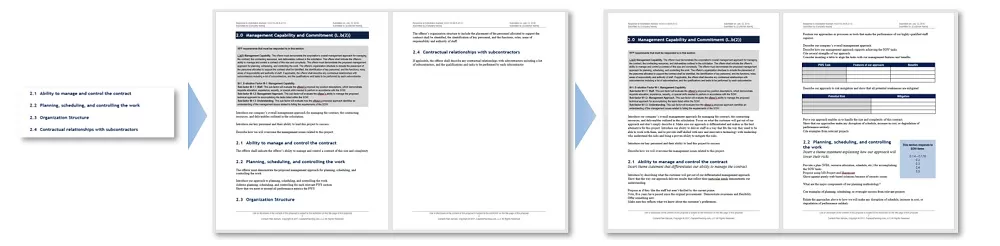 What happens when you start writing as soon as you have an outline… An outline is where you start. But it’s a long, long way from the finish line. If you start proposal writing from an outline, you will be giving your proposal writers zero guidance beyond a heading. And maybe an RFP. If they read it. You are expecting the writers to figure it all out. Even the best proposal writers need input and to think things through before they start writing. And less experienced writers tend to write
- 0 comments
- 3,213 views
-
 Our tangible training programs are all based on exercises that create the tools you’ll need to be successful. Instead of just talking about process, we’ll create the checklists you can use to improve your process. Instead of focusing on steps and procedures, we’ll focus on goals and accomplishments. We’ll help you understand how to approach each topic, how to define success, and how to measure your progress toward achieving it. These are private sessions. Only staff from your company will p
- 0 comments
- 1,287 views
-
 It's true that the odds of winning a proposal when you have never even talked to the customer go down so much that it may not be worth bidding. But the fact is that sometimes companies win them, so let's look at when it's possible to win and what you can do to increase your chances. Occasionally, in some markets, no one gets to know the customer before they surprise the world with an RFP. It largely depends on the nature of what they are procuring. Bidding blind is not worth it. Except when
- 0 comments
- 3,296 views
-
 Early in my career, after a terrible proposal experience, I’d focus on improving the proposal process because that is what I had control over. I thought with the right procedures and enough dedication to them we could fix any problem. There are a couple of problems with that: The proposal process is not sequential. It is goal driven. You won’t be successful focusing exclusively on the steps. There is more to success than following procedures. Over time I discovered that wha
- 0 comments
- 1,681 views
-
 Don’t start your proposal by thinking up everything that’s good about yourself that you should tell the customer. This can actually lead to bad proposal writing. Instead, start your proposal by think about what the customer needs to hear. But before you can do that, you have to know the customer. And before that, which person at the customer will be reading? Will it be the one receiving the services? The one who understands what is being procured? The one who runs the procurement
- 0 comments
- 2,003 views
-
 With government multiple award RFPs of huge value becoming routine, this is a good time to reflect on the customer and how the number of proposals they receive impacts how they make their selection decisions. What if they only get one proposal? If the customer only expects to get one proposal, or if that’s just the way it turns out, they approach the proposal with a few considerations: Does it meet their requirements? They have no other proposals to compare it to. So they compare
- 0 comments
- 1,518 views
-
 Claims are lame. After having sat through countless debriefs, especially the ones where the customer evaluated based on strengths and weaknesses, I’ve realized some things that explain a lot about proposals: I have never seen a customer agree that any of the thousands of claims made in those proposals were a strength. The strengths cited by customers are almost always simple facts, like something you have or have done. The weaknesses they cited were usually things that were
- 0 comments
- 2,365 views
-
 What goes through the customer’s head while they’re evaluating your proposal? In addition to all of the distractions like what time they have to pick the kids up from school today or what they’d like to do after work, the customer has a lot to consider when deciding whether to accept your proposal. Even if the evaluation is conducted formally by a robot, with forms and detailed procedures, they will still consider the big picture. But what’s in that picture? The customer will consider your
- 0 comments
- 1,628 views
-
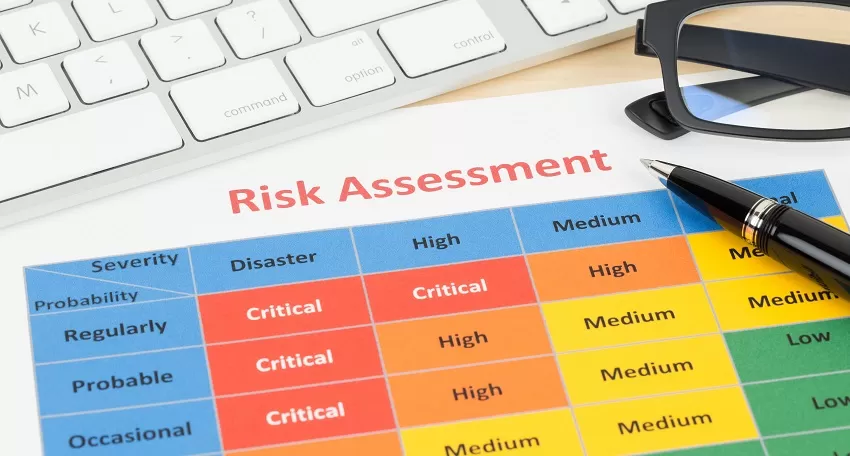 When the customer asks you to describe your experience, what should you write about it? Should you describe the work you did? Should you describe the results you achieved? Should you talk about something else? It turns out that when the customer asks for your experience, they could be could be asking for many different things. Past performance Past performance is something different from corporate experience. Past performance is a reference check to discover
- 0 comments
- 3,197 views
-
 A simple guide to what to write about in your proposals. Good things to write about in your proposals These are the things the customer is looking for, the things they want to see. Instead of talking around them, make a point related to them at the start of each paragraph. Explanations and reasons “why.” The reasons why you do things show more insight and depth of understanding than a claim about what you do or how great you are. Proofs. Proof points can be evaluated as s
- 0 comments
- 2,363 views
-
 I’ve seen way too many proposals produced by experienced people that were thoroughly ordinary. In my worldview this means they sucked so bad it was embarrassing, because ordinary isn’t competitive. When your job is cranking out proposals at high volume under adverse circumstances, people tend to give up polishing them. If people do this long enough, they sometimes stop trying. But they continue to reliably crank out acceptably adequate ordinary proposals that they try really hard to make good. B
- 0 comments
- 2,129 views
-
 If you ever find yourself competing against me, please use these themes! I want you to use these themes because they are easy to beat. They basically promise the minimum. They demonstrate insecurity, lack of insight, and zero initiative. They sound like the claims people expect to hear made in bad commercials. They get ignored. They will never increase your evaluation score. They usually find their way into proposals when the writers haven’t received any better input and have to make someth
- 0 comments
- 3,210 views
-
Within the MustWin Process Architecture we divide the input layer into the following areas: information, strategy, and offering design. In many companies, the scope of the proposal process begins with RFP release. However, proposals require input, and that input often must be gathered before the RFP is released. Regardless of how you define the scope of the proposal process, you should define the inputs a proposal requires to maximize your win rate. The input layer defines those input req
- 0 comments
- 205 views
-
 While every proposal process has goals, most processes are procedure-driven. Their focus is on completing tasks and steps. When we break down a major effort, we tend to think about the things "we need to do" to complete it. However, it is better to break things down by what must be accomplished instead of what you think people should do. It's a bad sign when a process description brags about how many steps it has. Each extra step adds to the likelihood that it will break in practice and th
- 0 comments
- 3,042 views
-
 Why does everyone assume every proposal should have a proposal manager? Before you respond, take a deep breath and contemplate that. There are alternatives to the traditional proposal manager-led hierarchy. If you think that proposal managers have all of the responsibility and none of the authority to do their jobs, maybe the problem is you have the wrong management model instead of a lack of authority. Most of the conflicts that are endemic to proposal development come from a lack of
- 0 comments
- 5,076 views
-
 The best way to create a checklist driven proposal is not what you think. It’s not about checking off which content to include in a template. At least not if you want to win. A checklist driven proposal should be about what you need to write or do in order to win. A checklist driven proposal should help you figure out what you need to say in order to win instead of picking from a list of things said in the past to other customers in other contexts. When you know what
- 0 comments
- 9,045 views
-
Within the MustWin Process Architecture we divide the performance layer into the following areas: proposal management, proposal writing, and quality validation. The performance layer is where the proposal document gets created. It is what is traditionally thought of as the proposal process, only it is organized architecturally instead of sequentially. This is because we are addressing functionality and not sequence, and functionally proposal development consists of the actual writing and pr
- 0 comments
- 152 views
-
 Most people do not follow their company’s proposal process. Most proposal managers blame process failure on the participants not having enough discipline to follow the process. People focus on the burden of following a process. Or the need for training about the process. But those are not the real reasons that people are not following the process. The real reason your process is failing is that it’s not delivering the information that people need. They get an assignment and an RFP that they
- 0 comments
- 8,447 views
-
 Having a proposal process is easy. Successfully implementing a proposal process is hard. And everyone else is to blame. Okay, maybe you are part of the problem too. I call it the Other People Problem. To create a proposal bigger than yourself, you have to be able to work through other people. And other people are problematic in so many different ways. For something to be a proposal process, it must be something that other people can implement. If a specific person is required for it to
- 0 comments
- 7,346 views
-
How should you position your experience to get the best score? You may need to position things differently in different sections of the proposal where experience is relevant. Make sure you thoroughly tailor any experience write-ups you might be reusing to match the way you will be positioning it. You can’t be all things to all people. What matters about your corporate experience to the new customer? Don’t try to position against all of these that sound beneficial. Carefully select the ones
- 0 comments
- 3 views