Articles
-
 Writing a proposal requires transforming the information you have to enable the customer to make a decision in your favor. The larger and more complex the proposal, the more people that will be involved. Throw in a tight, unforgiving deadline and you’ve got a complicated undertaking that involves getting people to understand how the transformation will take place, being capable of making the transformation, doing it by the deadline, and doing it so well the outcome is successful. When herdi
- 0 comments
- 2,052 views
-
 Here is some guidance that can help you when you sit down to write the proposal. While we've broken it down so that someone could follow it sentence by sentence, the goal is really just to enable people to write better proposals by giving them something to check their paragraphs against. If you are stuck regarding how to approach proposal writing, this can help. A structured approach to writing introduction paragraphs When you sit down to write, before you start summarizing ask yourself
- 0 comments
- 419 views
-
 Are you trying to win all of your future proposals, or just the one on your desk? Are you thinking short-term or long-term? Are you trying to do a proposal and get back to your other work, or are you trying to develop an organization? Some of the things that drive how many people are needed to win a proposal are fairly obvious: The amount that needs to be written The schedule The size of the production effort But some of them are less obvious, and these tend to be t
- 0 comments
- 6,364 views
-
 RFP compliance means demonstrating fulfilment of all the instructions and requirements contained in the RFP. RFP compliance is mandatory for some bids, such as Federal Government RFPs. The problem is that full RFP compliance often cannot be achieved. Proposal managers are taught from birth that: Proposals must be 100% compliant or they will lose and it will be your fault. Do not parrot the RFP. It even says so in the RFP. Do not merely state compliance. That is not c
- 4 comments
- 8,423 views
-
 Everything is a trade-off. You need to keep your overhead costs low, but you also need to win contracts in order to grow and increase the size of your overhead pool. A lot of companies make the mistake of treating the proposal function as an expense instead of an investment that can be approached mathematically. The purpose of this article isn’t to teach you that math. But you should know that going from a 20% win rate to a 30% win rate will increase your revenue by 50% with the same numbe
- 0 comments
- 1,808 views
-
 Most people who want to win contracts realize they need a proposal management process. An unfortunate percentage think they have a proposal process when they really just have a way of doing things. But what really messes companies up is that they have the wrong goals for their proposal management process. Sometimes their process even works against what they should be trying to achieve. Here are 8 things that people often want from a proposal management process: Lowering costs and in
- 0 comments
- 1,876 views
-
 Maybe you’ve got a great proposal process. Maybe you don’t. But when you’re in the middle of one, you’re stuck. You can't go back in time and prepare better before you start. The resources you have may be all you're going to get. You may not be able to get answers to your questions. And yet, you must conquer. So how do you figure out what to do when? How do you herd the cats to work like a team? Where should you devote your attention? How do you make the most of your circumstances? Is there
- 0 comments
- 2,531 views
-
 Sometimes the customer recycles their RFPs. They use generic evaluation criteria. They hurt themselves when they do this, but they still do it. The advantage of using generic evaluation criteria to the customer is that they can interpret them any way they want. They can select the bidder they prefer and then justify it. It’s not supposed to work that way, but when you see generic evaluation criteria, you have to wonder… The disadvantage to the customer is that generic evaluation crit
- 0 comments
- 3,530 views
-
 Instructions Answer the following questions to provide the context for writing the Management Plan after the RFP is released. Keep your answers short. The less narrative the better. After the RFP is released, your responses here will enable the Proposal Content Plan to be prepared more quickly and to contain better instructions for the authors who will write the proposal narrative. Questions that drive your strategies Since this is intended for pre-RFP response, anticipating the
- 0 comments
- 170 views
-
 Instructions Answer the following questions to provide the context for writing the technical approach after the RFP is released. Keep your answers short. The less narrative the better. After the RFP is released, your responses here will enable the Proposal Content Plan to be prepared more quickly and to contain better instructions for the authors who will write the proposal narrative. Questions that drive your strategies Since this is intended for pre-RFP response, anticipating t
- 0 comments
- 356 views
-
 Instructions Answer the following questions to provide the context for writing the Staffing Plan after the RFP is released. Keep your answers short. The less narrative the better. After the RFP is released, your responses here will enable the Proposal Content Plan to be prepared more quickly and to contain better instructions for the authors who will write the proposal narrative. Questions that drive your strategies Since this is intended for pre-RFP response, anticipating the fi
- 0 comments
- 225 views
-
 Objective proposal reviews might be possible if you have unlimited staffing. But nobody has unlimited staffing. And maybe striving too hard for objectivity actually gets in the way of validating the quality of a proposal. Where should we draw the line between reviewers who are part of the proposal effort and reviewers who are separate? Do you really have enough trained reviewers to bring in a fresh team for every review to ensure objectivity? If you do, you are the exception and not the rul
- 0 comments
- 3,118 views
-
 The higher the quality of the draft, the less important your proposal reviews become. The disruption they can cause also decreases. This makes investing in getting the first draft right worth the effort. They need some way to compare what they have written to what is required. If you haven’t defined quality for them, they can only guess at it. In addition to defining proposal quality, you need quality criteria that can be used to measure whether the definition has been fulfilled. Quality cr
- 0 comments
- 159 views
-
 Are your proposal reviews leaderless? Just because people show up, are enthusiastic, and are willing to work hard that doesn’t mean they are well led. Usually the proposal review function is coordinated by the proposal manager. But if the proposal manager is responsible for creating the proposal and administering the process, does it make sense to add quality validation to that list? How important is quality validation to your win rate? Is it enough to merit some dedicated attention? C
- 0 comments
- 111 views
-
 Reviewers do not show up already knowing what to do. They don’t know the procedures are to be followed. They don’t know the RFP. They may not even know the proper way to read an RFP. They also may not know how your organization defines proposal quality. They may or may not know the customer. They may not even know how to effectively review a proposal. All of their experience may have come from doing purely subjective proposal reviews instead of performing quality validation. They need training i
- 0 comments
- 167 views
-
 Creating and implementing the proposal schedule: The Proposal Manager is in charge of creating and implementing the proposal schedule. The Capture Manager is responsible for identifying the resources required. You can present your proposal schedule using whatever format (calendar, gantt chart, PowerPoint, etc.) you prefer. But first you need to determine what should go on your schedule. Within the MustWin Process we designate several plans, including Logistics a
- 0 comments
- 197 views
-
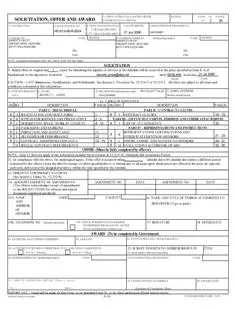 Starting the proposal outline A detailed RFP will provide: Instructions for how to organize the proposal The evaluation criteria that will be used to assess the proposals, or at least a description of what’s important to the customer The requirements that your proposed offering should fulfill The outline needs to reflect the structure that the customer expects and incorporate everything that the customer wants you to address. Using a compliance matrix to complete y
- 0 comments
- 184 views
-
 Having a Production Plan helps to anticipate issues ahead of time and to ensure that production will go smoothly. It also serves as a handy reference for answering questions about how the final proposal will be produced. The Proposal Manager should work with the Production Manager to complete the Production Plan. Due Date: Shipment/Delivery Date: Delivery method: Hand carried FedEx Email: Website upload. Ur
- 0 comments
- 150 views
-
 The Proposal Manager is responsible for tasking people with proposal assignments and tracking them through to fulfillment. The Proposal Manager makes the assignments. The Capture Manager is responsible for making sure there are enough resources available to complete the assignments. Proposal assignments can take different forms. Develop the approach that will be proposed. Develop the content plan or other supporting documents. Write a
- 0 comments
- 275 views
-
 The goal of the Competitive Assessment in the MustWin Process is to capture the information needed to write the proposal. In the proposal you will need to describe the role of teaming partners and the benefits to the customer for having them. You will also need to position your company and offering against those of your competitors. The proposal must articulate the reasons why the customer should select you, as opposed to any of your competitors.
- 0 comments
- 162 views