Articles
-
 Getting into position to win before the RFP comes out requires preparation. Preparation doesn't just happen. The things you do before the proposal even starts can have a huge impact on your win rate. It makes more sense to focus on them than to rely on last minute proposal heroics. Here are links to five sets of tips that lead to even more content that can help you put just enough structure into place to be successful: Discovering what it will take to win. We think of sales as driven by ch
- 0 comments
- 2,438 views
-
 This proposal template applies to any industry. When combined with your subject matter expertise, it will enable you to quickly write a proposal in a way that matters to your customers. The easiest way to understand this approach to proposal writing is to think about using it to structure your paragraphs. Once you see how to do that, you can use the exact same template at the section level by breaking down each section into its components (topics, steps, features, locations, etc.). The intr
- 0 comments
- 2,460 views
-
This one page of a brochure contains all of the following claims: Everybody loves us. You can depend on us. You can trust us. Family owned and operated. Since 1984. We pride ourselves on… Excellent customer service. We can help with everything… We’re the most recommended. Customers love us. It’s a mixed bag of unsubstantiated claims and claims that fail to pass the “So what?” test when taken on their own. It’s also pre
- 0 comments
- 2,374 views
-
 Companies often ask their proposal specialists to wear many hats. They blur the lines between sales, business development, capture, and proposals. And when it comes to proposals, they don’t make any distinction between proposal management, proposal writing, or proposal production. Some companies, usually the smallest ones, have one person doing all of them. When that person is working on a proposal, prospecting for new leads stops. When someone is writing, they stop managing. And capture g
- 0 comments
- 1,587 views
-
We want to free you up to focus on relationship marketing by doing the online searching and monitoring of opportunities. When we monitor websites like SAM and identify opportunities for upcoming recompetes you can focus lead generation through relationship marketing. We’ll even help with that by letting you know when to reach out to customers before the RFP for recompetes are written so you can reach out and establish a relationship, influence the RFP, and get into position to win. We’ll stay be
- 0 comments
- 2,075 views
-
 Incumbents like to play it safe, especially when things have gone well. When the recompete comes up, they often focus on not making any mistakes and submitting a proposal that is fully compliant with the instructions. You shouldn't assume the recompete is wired for the incumbent contractor. But if you want to beat the incumbent, you must take risks. Just not any risks. You should target the things the customer cares about the most. Your proposal can be more credible than the incumbent’s pro
- 0 comments
- 3,081 views
-
 It saves so much time to write a short proposal than writing a long one and editing it down. It also involves a lot less risk. However, it does require you to think about what you are going to write before you start. But you should be doing that anyway. Skip the introductions You don’t need a page to introduce your company. You don’t need half a page to introduce each section. Just say what matters — to the customer. Just because something matters to you does not mean it will matter to
- 0 comments
- 2,917 views
-
You will not achieve the maximum ROI by staffing business development, capture, and proposals based on using the minimum number of staff to crank out the maximum number of proposals. To maximize your ROI you need to staff according to the things that most impact your win rate. Increases in win rate return orders of magnitude more than the staffing required to achieve them. Here are seven things you should staff your proposals to achieve: RFP Compliance. Achieving compliance is critical.
- 0 comments
- 146 views
-
 I'll let you in on a little secret. Nobody has found a way to make working remotely be like working colocated. I recommend that you don't even try. Treat it as an opportunity to reengineer the way you do things. You’re probably overdue anyway. This is a good time to think about what people need to complete their proposal goals. It’s not just about incorporating some new tools. Note, I did not say what people need to complete their assignments. Since you can’t just make a little change and g
- 0 comments
- 1,622 views
-
 A lot of companies make the mistake of treating a customer request for information as an opportunity to start selling them and end up sending them a mini-proposal. This is not the best way to position your company when the customer issues a request for information or makes a sources sought announcement. 5 things you should NOT do in your RFI or sources sought response Sell. It’s the wrong time. Selling at the wrong time makes you look pushy and out of touch. Don’t be that kind of sal
- 0 comments
- 2,557 views
-
 Art is in the eye of the beholder. This is mine. Proposals are more mechanical than art. They are more scientific. They are quantifiable. They are competitive. They are capitalistic. And they are art. There is a depth to doing proposals that most people don't understand and it holds them back. But the art in proposals is not where most people expect to find it. The art is not in the construction, the presentation, or the style of the words. The art is in the solution. And n
- 0 comments
- 2,091 views
-
 We published 98 new content items last year. But it's not the quantity that counts, it's the quality. We published some of the most useful articles ever this year. We've split them into two groups, one for everyone and one just for subscribers. Just take a look and think about how they can help improve your win rate: 12 fundamental problems you have to solve to prepare great proposals The best example of bad proposal writing I've ever seen 14 examples of proposal writing that
- 0 comments
- 1,475 views
-
 What drives the efficiency of the proposal process is not what you think. It’s not how quickly you can crank out your proposals It’s not how much time you put into producing the document It’s not what causes a train wreck at the end of the proposal, or what can fix it It’s not how easily you can recycle your previous proposal content It’s not any of the things people complain about when working on proposals Losing efficiently is counter-productive. Put
- 0 comments
- 2,019 views
-
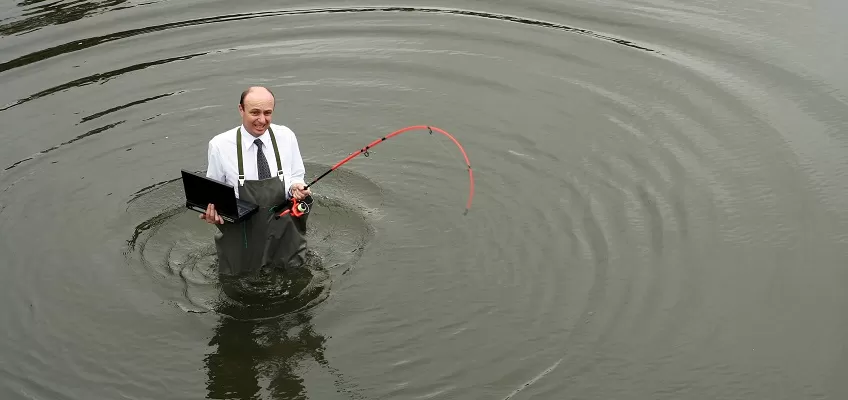 The secret to business success is not to find as many leads and submit as many proposals as possible. You will not become prosperous by producing lots of cheap, low win rate proposals. While you may catch a fish by randomly casting your line over and over, you will not feed a village that way. The solution is not to cast as many lines as you can. You need to become smarter about fishing and invest in your gear. Maybe buy a net and a boat. You need to put some effort into it. Fishing at ran
- 0 comments
- 2,191 views
-
 Each time you start writing without a plan for what you are going to write, I’m going to start with the points my writers are going to prove. Every time you try to figure out what to offer by writing about it, puts me several drafts ahead of you. Every time you start your proposal without input puts you another draft behind me. Every day one of your people misses a deadline is a day added to my schedule. Each time you start without customer insights puts my score ahead of yo
- 0 comments
- 2,764 views
-
 When given an opportunity to network with their peers, talk to experts, and forge relationships with potential customers, why do some many people simply go on LinkedIn to post ads? What percentage of LinkedIn posts start off with "We are so excited to announce..." And why do so many of them write their proposals the same way? It's like they all follow the same template. Here's what it looks like when you inject a little too much honesty into it: We are so pleased to submit the followin
- 0 comments
- 1,626 views
-
 If you can articulate a repeatable proposal process and successfully implement it in the real world, congratulations! You are a proposal manager. Your education, however, is just beginning. Proposal development is not really about the process. Or said another way, the proposal process is just one tool for accomplishing the goal of winning in writing using a team of people working against a deadline to respond to customer requirements better than your competitors. The process is only part of
- 0 comments
- 2,351 views
-
 A lot of RFPs assess proposals in terms of strengths and weaknesses. But they usually don’t tell you what a strength is. While you will find some customers that will define a strength as meeting the requirements, that is not a safe assumption. Some customers believe a strength is something that goes beyond merely meeting the requirements. Weaknesses are easy to define. It’s when the customer can’t find something they think you should have talked about. Note: that’s not quite the same thing
- 0 comments
- 2,840 views
-
 Some people write like they are proposal narcissists. Their proposals are all about how great they are. They claim this. They claim that. They describe themselves in such grandiose terms. When they explain their approaches they say “We will…” after “We will…” after “We will…” as opposed to focusing on what the customer will get. But your customer doesn’t believe that noise. So why are you even writing it? You wouldn’t represent yourself in person with someone you just met. But when we don’
- 0 comments
- 1,860 views
-
 If winning proposals is a mission critical function for your company, then you can’t treat the proposal management process as a support or document production function. The goal of the proposal management process is to guide the people working on a proposal and enable them to be successful by accounting for the information, planning, and quality assurance needed. But this doesn’t really capture the importance of it. The proposal management process requires going beyond document producti
- 0 comments
- 2,137 views