Articles
-
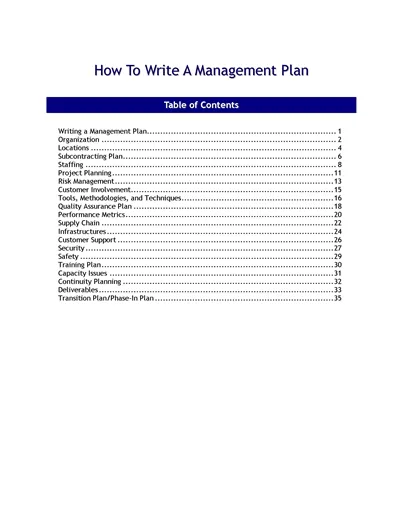 This guide is organized like a cookbook, providing over 180 items divided into 20 topics. It will help you answer your customer's questions regarding how the work will be done, who will do it, what resources will be required, how to mitigate the risks, and what you will do to ensure quality. It will help you prove to your customer that you can successfully manage the project and deserve to win the contract.
- 0 comments
- 897 views
-
It is so much easier to talk about your experience than to plan approaches or develop differentiators. Don't fall into the trap of thinking that the value of your experience answers all requirements. Your experience has no value and does not matter. Unless you articulate that value and bring meaning to it. The following example is loosely based on proposal content that was actually submitted to the customer, with some changes to hide the identity of the company that submitted it. The compan
- 0 comments
- 215 views
-
Describing your own company is a mistake, even when the RFP uses the word “describe.” The customer doesn’t care about your company, they care about what they are going to get and whether you can deliver as promised. They ask for the description because they want to assess that ability. The following example is loosely based on proposal content that was actually submitted to the customer, with some changes to hide the identity of the company that submitted it. The company was not one of our
- 0 comments
- 227 views
-
Describing your own company is a mistake, even when the RFP uses the word “describe.” The customer doesn’t care about your company, they care about what they are going to get and whether you can deliver as promised. They ask for the description because they want to assess that ability. The following example is loosely based on proposal content that was actually submitted to the customer, with some changes to hide the identity of the company that submitted it. The company was not one of our
- 0 comments
- 330 views
-
 A lot of proposal writing follows common patterns. When we review proposals for companies we see new examples of the mistakes below all the time. If you take a step back from the details, the patterns are quite simple. If you learn to recognize the patterns, you can avoid writing like this: First I’m going to tell you what you need. Then I’m going to say that I’ll provide it. Before example: XYZ agency needs to update its website. Our approach to building websites is based on compli
- 0 comments
- 4,816 views
-
 Separating how you figure out what to offer from writing about it is critical to avoid endless draft cycles that only end when you run out of time and you submit the proposal you have instead of the proposal you want. But you still have the problem of how to design your offering. Designing your offering is an engineering problem. And the engineering approach depends on the nature of what you offer. There is no single engineering methodology that is best for all. But there are some things th
- 0 comments
- 5,732 views
-
 When the RFP forces everyone to bid the exact same thing, the ways people differentiate their bids tend to be intangible. This makes it difficult for the customer to evaluate. How, other than price, do they rank the bids based on intangible differences? How do they justify selecting a winner that costs more when the difference in value can't be quantified? It's difficult, but if your proposal is full of unsubstantiated claims, you don't have a chance. Consider each of the following ways com
- 0 comments
- 7,227 views
-
 Proposal writing like these examples can turn a great proposal into one that is merely ordinary. You might not get fired for sounding just like everyone else, but it's also no way to win your proposals. I see these issues so frequently when I review proposals for companies that they are like clichés. The good news is that the opposite is also true. Learning how not to write like this can turn your good proposals into great proposals. Correcting bad habits like these can help your proposals stand
- 0 comments
- 6,359 views
-
 Win probability is the likelihood that you'll win your pursuit. It would be so nice to be able to predict the probability of winning a bid. It would be really nice to know what percentage your chances are. It would so help with resource allocation and making decisions. But there are just two problems with expressing win probability as a percentage: None of the algorithms that make the attempt to calculate your percentage chance of winning have statistically significant data to base the
- 0 comments
- 3,585 views
-
 read a description of the other RFP sections here. Some may have things that you must respond to, like Section K, where they put the “Certifications and Representations” (where you may have to “Certify” or “Represent” things like whether you are a U.S. firm, a minority firm, that you haven't defaulted on previous contracts, etc.). But the others are part of the legal form or contract boilerplate, and you won’t have to read them the same way you will the Statement of Work and Evaluation Criteria.
- 0 comments
- 7,962 views
-
 With a complicated Request for Proposals (RFP), it can be hard to figure out what the customer wants. You can create a compliance matrix to allocate the requirements to your proposal outline, but with a complicated RFP there can be a combination of broad items that apply to whole sections, ridiculously specific items that are hard to integrate, contradictory items, ambiguous items, poorly explained items, items that use questionable vocabulary, etc. No amount of questions you can ask, even if yo
- 0 comments
- 12,117 views
-
 We get tons of inspiration for our articles from participating in discussions in our group on LinkedIn. We were thinking about something we posted there recently on the topic of what to do when you get an RFP. We realized that some people set themselves up for failure right from the beginning. When you get an RFP, do you do the things that lead to winning or the things that lead to losing? Do you assume you are going to bid and start work on the proposal or do you look for reasons not to b
- 0 comments
- 11,376 views
-
 Is it the statement of work? The evaluation criteria? The pricing model? Those are all important, but if you want to win there is something about an RFP that is even more important. The problem is that it’s not even in the RFP itself. Anyone can write a proposal that responds to what it says in the RFP, and certainly your competitors can do so. But when you try to write a great proposal, you’ll quickly start asking questions about the RFP, and you won’t find those answers in the document.
- 0 comments
- 13,171 views
-
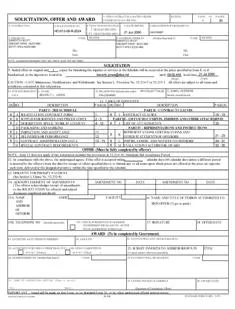 The release of the RFP is the moment of truth. Either you are prepared or you are not. You will either be ready to issue assignments, or trying to figure everything out. The first thing to do is to distribute copies of the RFP to those who will be involved. Here is a sample RFP distribution list to speed this up. Then you should follow a checklist to make sure you quickly consider everything you should, without overlooking anything. The deadline for asking questions about the RFP
- 0 comments
- 814 views
-
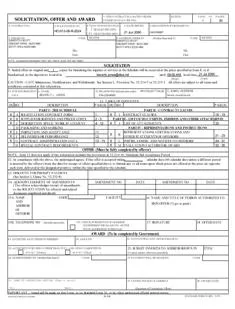 Understanding the content and structure of a Government RFP, as shown below, enables you to write better proposals. The content of a U.S. Federal Government RFP is mandated by the Federal Acquisition Regulation (FAR). The FAR is a very lengthy and detailed set of rules that defines what must go into a Federal RFP and how it must be structured, as well as the acquisition and RFP process. Government RFPs that are based on the FAR are broken down into sections that are identified by letter (A - M).
- 0 comments
- 6,519 views
-
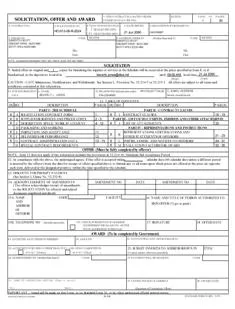 The first step in responding to RFPs is to decide whether to bid. One you've decided to bid, then you need to plan the proposal. For some proposals, like those responding to a U.S. Government Request for Proposals (RFP), if you don't follow the RFP's instructions precisely your proposal can be rejected without even being read. This makes RFP compliance absolutely critical for winning. This is true for most, if not all, B2G RFPs. RFPs can be intimidating if you don't know how to read th
- 0 comments
- 10,345 views
-
 The right words to use in a proposal are the ones that the customer needs to hear to reach a decision in your favor. This can be hard to figure out. Luckily, when the customer releases an RFP, they give you those words. Before you put pen to paper, proposal writing requires you to interpret and understand the RFP. This skill has more to do with your ability to win a proposal than your writing skills. Where to find the words you need to use When a customer writes an RFP, they identi
- 0 comments
- 8,563 views
-
 Should you bid everything? Or should you carefully pick and choose what you bid? How should you qualify which leads are worth pursuing? How do you decide which leads are worth bidding? If you have to justify dropping a lead instead of justifying pursuing a lead, you might want to change the dialog surrounding your bid decisions. To help you know when it's time to rethink your bid/no bid process, we created a list with nine ways to know if your bid decision process needs improvement to hel
- 0 comments
- 7,316 views
-
 It’s easy to confuse strategic planning with business planning. However, what business you want to be in and how you should allocate resources to do business are two very different issues. If you jump ahead to business planning without having done a thorough job of strategic planning, you risk achieving great resource allocation applied to the wrong strategies. You might think that you know what businesses you are in and want to be in, but that does not give you a strategic plan. If your strat
- 0 comments
- 21,001 views
-
An information advantage is the most important ingredient for a winning proposal. Relationship marketing can be measured by its ability to deliver an information advantage. Most companies are exposed to plenty of information about their bids. But they don’t necessary flow it to the right places or transform it into what is needed to win. Being able to maximize the advantage you derive from the information you have is a key skill for companies that do business by winning proposals. Th
- 0 comments
- 387 views