Articles
-
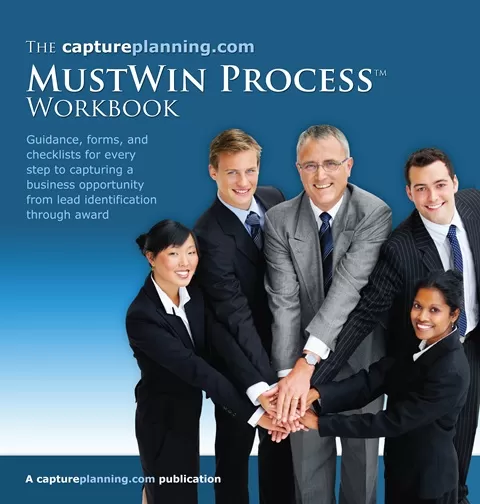 The CapturePlanning.com MustWin Process is an opportunity pursuit process that starts as soon as a lead is identified so that the way intelligence is gathered supports the closing of the sale with the submission of a proposal. Most “Must Wins” are already lost when the RFP comes out. Even companies who start early often find that time slips by and end up feeling unprepared when the RFP is released. The CapturePlanning.com MustWin Process provides you with a way to track and measure progress so
- 0 comments
- 304 views
-
 How much does it cost to do things the right way? What does doing things the right way mean when it comes to what you should offer in your proposal? Doesn't doing things the right way prevent problems? Doesn't preventing problems reduce costs? Where is the line where the cost of doing things right becomes greater than the cost of the problems? Isn't that something worth discussing with your customer? Obviously preventing problems is best, but the customer usually expects there to be
- 0 comments
- 10,546 views
-
 Most people approach reviewing a proposal the same way they approached reviewing papers in school. They think of the task as reading and commenting. Unfortunately this is only one way to review a proposal, and it is far from the most effective. Consider: What are reviewers supposed to be commenting on? Are reviewers following a checklist or compliance matrix? Will reviewers complete a form or have questions to answer? Are reviewers even working from a definition fo
- 0 comments
- 11,111 views
-
 When a proposal has an absolute deadline, it’s important to know that things are on track towards completion. But that’s easy to say and hard to do. It’s even harder when there are multiple people involved in the effort to create the proposal. 1. Milestones Proposals typically start with making assignments and setting deadlines. Then you wait for the deadline and find out the assignments aren’t complete. Or worse, the assignments look complete, but the quality is low. Either way, you have
- 0 comments
- 13,324 views
-
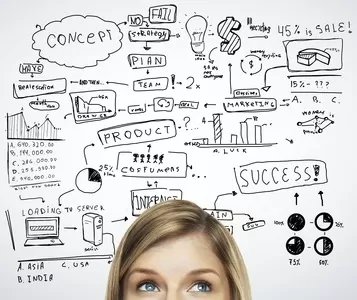 We make a distinction between win strategies and themes. Win strategies are what you do in order to win, and themes are what you say in order to win. Win strategies often imply what your themes will be about, and may include delivering certain messages. But sometimes they are action items that have nothing to do with the document. Win strategies are mostly about how you should position yourself and how to get into position. But there are a lot of different ways to position your company and
- 0 comments
- 13,913 views
-
 Here is a nice long list of topics to discuss and things to discover when you are talking with your customers. While they are presented as questions, you should not necessarily ask them directly. Rather you should weave them into your conversation and relationship. Obviously you won’t be able to touch on all of them in a single meeting. But they can help you create a contact plan, inspire you to dig deeper, and give you targets for follow-ups. All of them have the potential to produce intelligen
- 0 comments
- 15,557 views
-
 If it’s so obvious that your proposal should describe your strengths and downplay your weaknesses, why do so many proposals do such a poor job of proposal writing? This article was written after spending a day discussing that with a customer who evaluates proposals. I love testing my assumptions and learning everything I can about the customer's perspective from an actual customer. The customer I spent the day talking to worked in the Federal Government. But this topic is one of those that
- 0 comments
- 15,504 views
-
 Hiring a great proposal writer means going past the interview and recognizing great proposal writing and the skills that produce it. Many well-spoken candidates for proposal writing jobs who give a great interview often end up being ordinary writers. Many, if not most, highly experienced proposal professionals are ordinary writers — it’s the law of averages at work. This is even true of consultants who are proposal writers for hire. However, if you want to win you don't want to hire the mi
- 0 comments
- 18,370 views
-
 A Capture Manager is a dedicated person assigned to winning a business pursuit, and provides the leadership, coordination, resource allocation, strategy, and management needed to prepare the winning bid. A Business Development Manager is responsible for opening new territories and markets and generating a whole portfolio of leads. They feed the open end of the pipeline with leads and qualify them. Capture Managers are most often used for large complex pursuits with long sales cycles, w
- 0 comments
- 18,058 views
-
 All the cool cats know that the best proposals tell a story. But no one can really explain how to do that, let alone actually consistently achieve it when working with a group of proposal contributors who aren't specialists. Usually they just emphasize that your proposal should have a message. But what message and how do you construct it and put it in writing? So the next thing they try is proposal themes. But while everyone says they know what themes are, everyone defines them differently. And
- 0 comments
- 10,800 views
-
 After losing a proposal most companies request a debrief from their customer and hold a lessons learned meeting. Usually in the debrief companies either fail to ask the right questions or don’t get answers, and in the lessons learned meeting they focus on the wrong things. Were your estimates off? Why? Did you misunderstand the scope of what they wanted? Did you select, design, or recommend the wrong offering? Did the winner offer something the customer thought was b
- 0 comments
- 13,831 views
-
 Very few companies have effective bid/no bid decision making. They muddle through. When they do implement a bid/no bid process, it is usually flawed. The desires of participants carry more weight than any other criteria. Most find it extremely difficult to not take a chance at winning something. Some even have bid/no bid decision meetings, but they don't actually change anything. Below are several ways that companies approach the bid/no bid process. Leave it up to business development.
- 0 comments
- 21,671 views
-
 An ordinary proposal is a loser. Good is not good enough. Better than most is not good enough. Only the best proposal will win. Anyone can win occasionally. It’s winning consistently that’s hard. If your win rate is in the 20-30% range, you’re probably good at producing proposals. But they are not great. You usually lose. Keep in mind that if your win rate for your recompetes is much higher, then it’s also much lower for your attempts at gaining new business. For most companies, i
- 0 comments
- 12,932 views
-
 Waiting for a contract before you start developing your customer relationships is doing business development backwards. There are more ways to get ahead of the RFP and start relationship marketing than most people realize. This is a critical first step towards being able to influence the RFP. A lot of people focus on customer intimacy as something that improves your chances of winning. Plus, it sounds cool. No company is going to say they’re not interested in customer intimacy. It’s prett
- 0 comments
- 12,783 views
-
 When people have multiple things competing for their time, they often turn to templates and re-use libraries as a way to lighten the proposal workload. The problem is that they lighten the workload by reducing your win rate. And if you’re making smart bid decisions, the lost revenue will always be greater than the investment in doing proposals that are customized around your win strategies. People try to convince themselves that if they design their templates just right, they can beat the odds.
- 0 comments
- 15,353 views
-
 It’s not that companies don’t try to prepare before the RFP is released, although that is sometimes the case. The real problem is that when they do try, most of their effort is wasted. They have some time, they have some budget and somehow they start the proposal with nothing of substance to show for it. The reason you end up at RFP release unprepared even though you had an early start The primary reason is that they haven’t figured out how to stage what they know in a way that impacts th
- 0 comments
- 7,957 views
-
 Just because you really want to win a proposal, does not mean that you need to go about it in a complicated way. There may be a lot to do and a lot to think about, but that doesn't necessarily mean you need to have a complicated proposal process. Unfortunately, figuring out how to best simplify preparing proposals may not be obvious. In an effort to simplify their proposal efforts, people often do things that hurt their chances of winning. It turns out that the complexity of a proposal eff
- 0 comments
- 14,303 views
-
 When you have been blessed get stuck with a proposal assignment or decide to pursue a bid where you’ll be doing most or all of the work yourself, it’s natural to look for ways to make it easier. Here are seven things you need to do to successfully complete your proposal assignment and what you need to make them happen. After that, we explain our approach to make doing those things easier so that you can quickly complete your assignment and deliver a winning proposal. To successfully complet
- 0 comments
- 11,751 views
-
 You can’t write a great proposal unless you have a great offering. Trying to write about something in a great way when you haven’t figured out what that something even is, is just a recipe for failure. You need to start the writing already knowing what your great offering is going to be. In fact, making up a great offering by writing about it is a great way to ensure that you end up with a poor offering that is poorly explained. That’s a major way that companies end up with a low win rate, and
- 0 comments
- 8,984 views
-
 It's not enough to track your leads. You need to know what they add up to. You need to know how many resources you'll need to win the pursuit. And at each step along the way, you'll drop some leads. Either they fail to qualify, the customer cancels them, or they all land at the same time and you can't pursue them all. Pipeline analysis blends lead tracking with analytics. A pipeline model is a spreadsheet that shows your leads over time, status, source, and other attributes. The formulas contain
- 0 comments
- 11,736 views