Articles
-
 Read the proposal and make it sound better. The end.p.s. If you are not precise and careful, making a proposal sound better can actually hurt your chances of winning. Changing the wording of proposal headings and requirements can get you thrown out for non-compliance without even being read. Even if you don't get thrown out, it can hurt your score when customers search for keywords or strings in the RFP and can't find them in your proposal. Their words may be archaic or awkward, but th
- 0 comments
- 5,172 views
-
 Most companies perform their proposal reviews at level two. They recognize the need and are serious about reviewing their proposals. However, the results are not always effective, definitely not consistent, and many ask themselves if it's worth it. Some have made it to the third level and they understand that reviews are needed across all phases of the pursuit. But they too suffer from inconsistent results. Few, if any, companies ever reach the higher levels. I wonder why that is. It's espe
- 0 comments
- 6,486 views
-
 Red Teams are Obsolete! Why, after decades of trying, is no one able to have consistently effective Red Teams? Find out why the color team model is broken and can't be fixed.
- 0 comments
- 10,869 views
-
 I know a lot of companies that consider it a big achievement to have a major review of their proposals before they submit them. You might think it is if you compare it to not having any review. But having one review can actually provide less quality assurance than having none. Having one review can do more harm than good. Consider: Would two reviews be better? Not really. It’s still an exercise in what you want to give up. Do you want to give up making sure you’re ready before the RFP rel
- 0 comments
- 8,572 views
-
Validating the review plan ensures that the approach to proposal quality is sufficient The Executive Sponsor determines the level of quality required for the proposal by reviewing the Validation Plan. The Executive Sponsor should consider whether the items in the Proposal Quality Validation Plan are sufficient to achieve the level of quality required. The Executive Sponsor may wish to increase (or decrease) the level of formality in reviews, the number of p
- 0 comments
- 478 views
-
Should you review your proposal by reading it like the customer? Reviews without defined quality criteria can degrade into editing and proofreading. Editing and proofreading are good things, but you don’t need (or probably want) a senior review team to do editing and proofreading. If they are important, get a specialist to do it. It can be tremendously difficult to wait until the proposal is complete and try to fit in editing before the deadline. Sometimes it’s better to take a little risk
- 0 comments
- 134 views
-
Completing your proposal quality validation review plan Complete a copy of this form for each review you anticipate having and you will have a written proposal quality validation review plan. Each item identified on this form needs to be validated. That means that it complies with any plans, RFP, or specifications and that it possesses the attributes required to produce the desired proposal. Make a copy of this form for each review and ensure that all of your quality crit
- 0 comments
- 312 views
-
How you are going to conduct your reviews should be planned. The MustWin Process makes it easy. You should not wait until the proposal is written to figure out how to review it. Instead, you should start with a Validation Plan that specifies how the proposal will be reviewed and provides a basis for measuring quality and progress. A Validation Plan takes the quality criteria based on what it will take to win and allocates them to a series of reviews. Creating the plan
- 0 comments
- 345 views
-
 You need enough reviewers to cover your quality criteria. Some reviewers can be specialized. For example, one or more reviewers to focus on whether your proposal is RFP compliant, whether the technical offering is the best your organization can offer, whether you have the right bid strategies, and whether your positioning reflects your company’s strategic plan. They might all be validated by different people. Or combined into one review by a single person with the right background. You can
- 0 comments
- 162 views
-
 In the name of efficiency, you want to streamline the number of proposal reviews you have. However, doing so exposes you to a conflict with proposal quality. On top of this, the number of reviews is not even what impacts efficiency the most. Having fewer, but larger reviews that can’t possibly consider everything does not increase efficiency and decreases quality. On the other hand, more reviews and more reviewers can increase the logistical burden. The key question is “What is the fewest number
- 0 comments
- 196 views
-
Creating a Proposal Quality Validation plan Once you have created your proposal quality criteria, you need to allocate them to reviews. Then the plan itself should be reviewed to ensure it meets standards and expectations In order to complete the plan, you need to: Collect and group items that can be assessed at the same time Allocate criteria to the milestones on your schedule Determine the best method for reviewing each item (individua
- 0 comments
- 314 views
-
 A written definition of proposal quality helps to get everyone on the same page The CapturePlanning.com MustWin Process assures quality by first defining it and then validating whether or not it was achieved. The MustWin Process defines proposal quality as: The degree to which a proposal implements all of the things you have determined are necessary in order to win. Using this definition forces you to: Identify what is necessary to win Review
- 0 comments
- 601 views
-
 Consistently effective proposal reviews must start long before the document is even written. They should start by developing review criteria that are based on how you define proposal quality and what it will take to win. If you wait until a draft of the proposal has been written and then review it based on “best practices” and “experience,” what you will get is a generic review. The same shallow review that any other proposal would get. But many of those things are specific to the particu
- 0 comments
- 6,075 views
-
 If you think the best way to figure out what to write about in your proposal is to start writing, you may be making a colossal mistake. The mistake is that you’re skipping the part where you “figure it out.” You are thinking by writing about it. Look at how inefficient it is to have a conversation in writing. You think of something to say, and then you write it down. Meanwhile, the other person waits. When they get what you wrote, they read it and you wait. They figure out their response an
- 0 comments
- 5,924 views
-
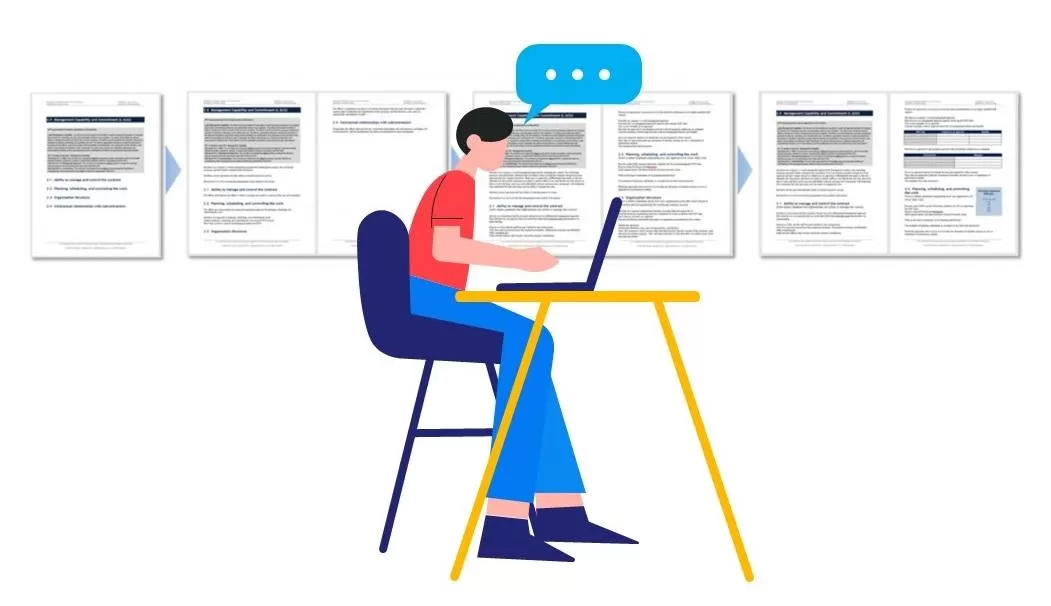 The Proposal Content Planning methodology was developed as part of the CapturePlanning.com MustWin Process. While the MustWin Process helps ensure you have all the information needed to support Content Planning, you can create a content plan for a proposal even if you don't follow our process in full. so you can handle complicated RFPs ✔ A way to build consensus regarding what should go into your proposal ✔ A way to deliver instructions, guidance, and information to
- 0 comments
- 18,858 views
-
 Everyone acknowledges the importance of having proposal reviews if you want to win. What most people don’t realize is that reviews are not the most important thing you can do if you want to improve your proposal quality and your win probability. How well you plan the content before you start writing has more to do with whether you win than having proposal reviews. Planning the content of your proposal before you write it is about preventing mistakes in the first place. Reviews are about cat
- 0 comments
- 11,359 views
-
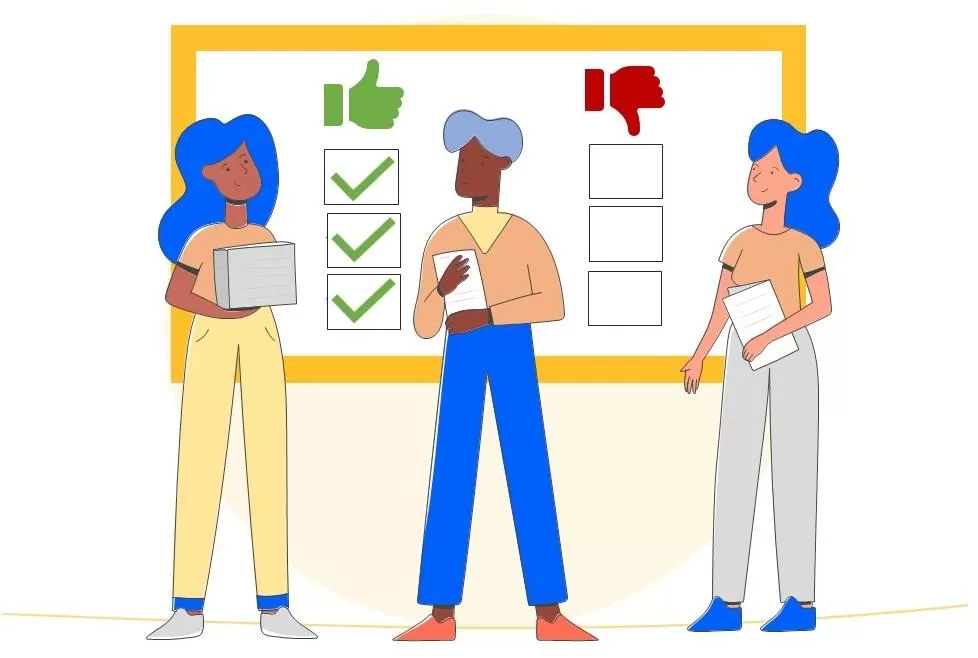 By using a Proposal Content Plan: You reduce the number of changes after people start writing by providing a means to ensure that instructions are complete and correct. You greatly reduce writing time by reducing how long it takes to figure out what to write. You eliminate the endless cycle of rewrites that occurs when writers and reviewers can’t agree on what should be written. Instead of being something difficult and mysterious, you turn prop
- 0 comments
- 232 views
-
 A Business Development manager's job is to find as many qualified leads as possible. If you make Business Development cover lead identification through closing, Business Development will have to stop chasing leads when the proposal starts if they make it their job to win. Your company will see-saw between having leads to chase yesterday but none tomorrow because Business Development got sucked into capture or a proposal. If you want a continuous flow of leads, you need continuous lead identifica
- 0 comments
- 1,748 views
-
 Lead qualification is the process of determining whether an “opportunity” is a valid lead. To be valid, it must be worth the cost of pursuing the lead. This should be calculated in steps with qualification criteria to be reviewed at each step to determine if the lead is still worth continued investment. These steps are often referred to as “gates” that must be passed to gain approval to pursue an opporunity. Most lead qualification criteria look for show-stoppers, or things that would make
- 0 comments
- 1,680 views
-
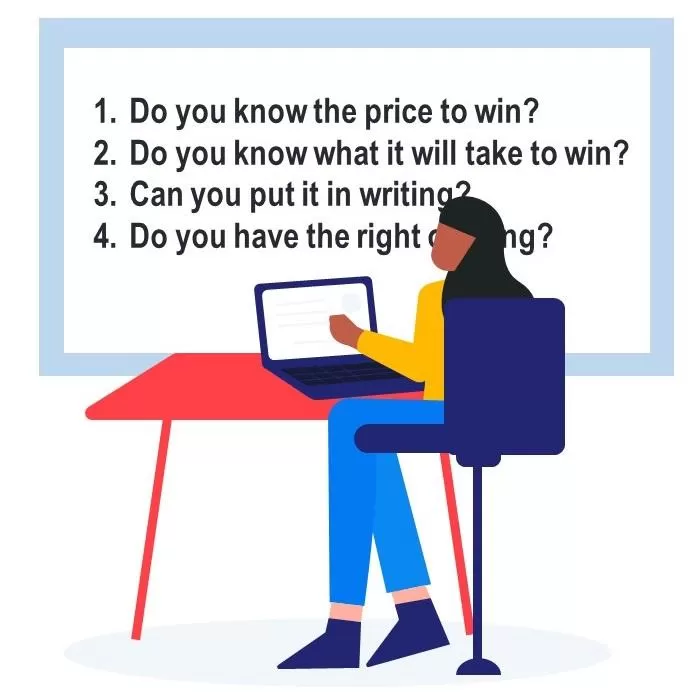 All proposals are won or lost based on whether the proposal writers have the right input. All. Of. Them. The right input can’t be somehow made up by proposal writers during the proposal. Either it’s brought to them so they can present it or they build a presentation without substance. And it’s best to bring this input at the very beginning, while there is time to do something about it. And this in turn usually means gathering the right input before the RFP hits the street and the proposal s
- 0 comments
- 2,816 views