Articles
-
Prompt background and instructions: This is background regarding how the prompt is designed to work. It is for the user and not the AI. Do not include this section in your prompt. The prompt is designed to look deeper at the root causes behind the failure. It is not as simple as giving the AI a single prompt and getting a single answer. It is an exploration. The prompt requires a description of what happened during the proposal. This description should be as observational and objective as possib
- 0 comments
- 26 views
-
 If your proposal lessons learned focus on steps in your process or specific things you should have done differently, you may be missing the big picture. Instead of asking “what can we realistically do to make things better next time” you should try asking “why did we end up where we did.” If you dig deep, you’ll probably find the cause happened long before the proposal even started. Whenever you have more than a few people working on a proposal, you have grown to the point where it takes more th
- 0 comments
- 5,761 views
-
 Imagine that when the RFP is released, the customer already knows you, and they trust you and your capabilities because you've demonstrated that you have insight into what can help them. You've shown them how to get what they need. Along the way, you’ve made recommendations to ensure the RFP doesn’t contain anything that would be a problem for you, as well as inserting some things that give you an advantage. Most importantly, you’ve gained some insight into the outcomes they are trying to achiev
- 0 comments
- 15,789 views
-
 The purpose of this article isn’t to tell you how to be an executive. You already know that. And if you don’t, you’ll be hearing soon from all the needy voices. The purpose of this article is to share some insights and lessons learned related to business development, capture, and proposals that can help you grow your organization and be more prosperous. This article is not about the details of those functions, but what those functions need from their executive sponsor. This isn’t obvious stuff,
- 0 comments
- 1,488 views
-
 Proposal losses generally fall into these categories: Price. The is the safe excuse. But losing on price has more to do with getting either the scope or the price to win analysis wrong than with bill rates. Your proposal didn't score high enough against the evaluation criteria. Proposal writing has a much smaller impact on your score than your strategic choices and tradeoff decisions. Someone had an offering that the customer liked better. Did it score better because the offering was better or
- 0 comments
- 5,191 views
-
 Persuasion is personal. What you require to be persuaded is different from what I require. Because of that, persuasion is not one thing. But it helps to understand the things that drive persuasion so that you can discover which combination of things will be required to persuade your customers. Persuasion is Part Differentiation If you are not different from the other alternatives the customer has, the customer won’t have a reason to select you. If you don’t point out the things that differentiat
- 0 comments
- 15,281 views
-
 Selling in writing is about influencing the decision process and the decision maker with what you put on paper. Procurements that require a proposal are not impulse purchases. When the customer will make their decision based on the proposal you submit, you need to sell in writing to influence the outcome in your favor. A salesperson has influence in person, but if they don’t carry that over to what gets put in writing they have no influence over closing the actual sale. Influence in person vs in
- 0 comments
- 6,409 views
-
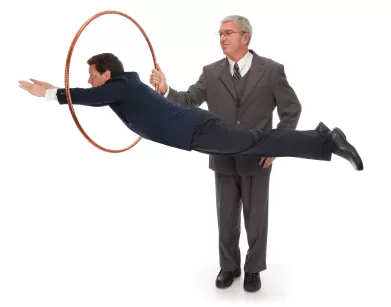 Improving your win rate has the potential to double your revenue from the exact same number of leads. But improving your win rate is easier said than done. Most of the things that will have the greatest impact occur before you even start the proposal. Here are 14 ways to get into position to win so that you can increase your win rate: Gain an information advantage. Everyone has the same RFP. The more you know about what matters to the customer and about the opportunity and competitive environmen
- 0 comments
- 7,335 views
-
 It sounds so obvious that few companies bother to define it. But if you want to maximize your win rate, it’s worth giving some attention to how you define proposal success. You can't intentionally seek proposal success or consistently achieve it if you're just guessing at what it is. Let's start by looking at some common but counterproductive ways that people try to define proposal success: Anything that wins! During the proposal phase you haven't won or lost, so it doesn't help you any to use t
- 0 comments
- 4,328 views
-
 Congratulations! You've reached the point where you always have proposal reviews. You may even recognize that only having one review can be worse than having none, and have several reviews. But while your reviews make clear improvements, reviews alone are not enough to achieve quality proposals. It all comes down to how you define your proposal quality criteria. The odds are you don’t have any. Most companies don't have written quality criteria (and there is no other kind). Most reviews are perf
- 0 comments
- 3,317 views
-
 Most companies consider a proposal review to consist of reading a draft document. This is the least effective of proposal reviews and makes the smallest contribution to proposal quality and winning. Yet people cling to it. I blame the obsolete color team model for getting in the way of proposals using the same quality assurance methodologies that have improved so many other things people do. This is especially true when the color team model degrades down to a single “red team” review. Most com
- 0 comments
- 8,412 views
-
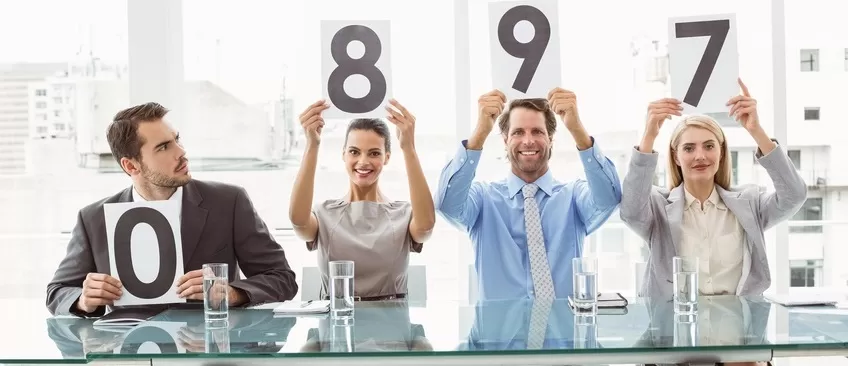 When I want to sound like a process guru, I refer to proposal “quality criteria.” When I want users to go along with my recommendations, I call them “checklists.” Either way, you have to figure out what they should be. This list can help you make sure your proposal quality criteria actually deliver the quality you are seeking. What it will take to win. This is the standard that defines proposal quality. You should never decide to bid a pursuit if you can’t define what it will take to win. Once y
- 0 comments
- 4,591 views
-
 This article focuses on winning U.S. Federal Government contracts. Many state and local governments also follow a process that is similar. Most government contractors aren’t that good at winning contracts. A 30% win rate is considered good and that means losing two out of three proposals. I've talked to companies that had a 7% win rate. This meant they had to submit over nine proposals to win just one. It's like they aren't even trying to get good at winning. If your approach to winning governme
- 0 comments
- 12,637 views
-
 When your business is ready to become serious about winning, there are only a few things that you need to do. The problem is that you have to do them all, and won’t have the time or resources. If you understand what you are trying to grow into, you can formalize things over time. But what you can’t do is ignore them. Ignoring them creates a trap that may prevent you from ever being able to get good at winning business. Here are some things to focus on as soon as you are ready to get serious abou
- 0 comments
- 3,227 views
-
 I like writing about how to do proposals The Wrong Way, because there can be power that comes from doing the opposite of what the best practices say you should do. I've done webinars and written on techniques for dealing with adverse circumstances where the best practices don’t apply. This is where doing things The Wrong Way are the most useful. If you do a proposal The Wrong Way at the wrong time, you will lose. But if you have no choice and find yourself in circumstances where you may not be a
- 0 comments
- 4,852 views
-
 Enough of all these best practices already. While we write a lot about them, it’s a lot more fun to write about how to cheat. What do you call it when the best practices no longer apply? Worst practices? That's not right. Best practices for adverse circumstances? That's too long. We call it cheating. But it's not the dishonest kind of cheating. It's the get out of your box and break the rules because that's the only way to survive kind of cheating. When you can't do proposals the right way, you
- 0 comments
- 4,549 views
-
 If you don’t sell a commodity, starting unprepared to win at RFP release is an organizational failure. You’ve missed your chance to develop an information advantage and are about to spend time and money on a proposal that you (by definition) aren't prepared to win. It is an organizational failure because it has failed at resourcing, planning, prioritization, and ROI calculation. Now that I’ve said that, let’s talk about starting at RFP release and winning anyway. Because it happens. If you want
- 0 comments
- 3,253 views
-
 Here are some of the strategies that we employ when fixing a broken proposal. I prefer to focus on process and preventing these problems. But once a proposal is broken, it's too late to implement a process. Maybe improving your process can prevent the next proposal from breaking. Fixing this proposal requires a different approach. Often the biggest problem is getting people to realize that they aren't going to be able to submit the glorious proposal they originally envisioned and need to change
- 1 comment
- 6,268 views
-
The problem with best practices is the worst care scenario. When the best practices don't apply or can't be used, they leave fail people by leaving them hanging. Don't worry. We're here to help. When you can't do proposals the right way, sometimes you have to do proposals The Wrong Way™. It's one of our favorite subjects to write about, because it's so diabolical and fun to do the opposite of what the best practices say you should do. But we have to give you fair warning: doing proposals The Wr
- 0 comments
- 5,150 views
-
 Eliminating waste is the only way to reduce proposal costs without lowering your win rate. Lowering your win rate always costs more than the intended cost savings. Most of the wasted effort that occurs during proposals occurs as a result of poor decisions or the failure to be ready at three critical moments in time during the development of the proposal. A little bit of effort applied at those critical moments can prevent a ton of waste later. If you want to reduce proposal costs, these three po
- 0 comments
- 4,775 views