Articles
-
 When you recycle proposal content, you can’t rely on people to simply tailor it. You can’t rely on them because you can’t count on them to be aware of everything that has changed. Unless you tell them. Re-using proposal content requires more than just updating it. It requires changing the context to reflect everything that has changed about the customer, your company, your offering, the competitive environment, and the external world. People often think nothing has changed. Sometime
- 0 comments
- 2,191 views
-
 Sometimes why you are proposing something says more about the value than a description of what you are proposing. Simply claiming value is both easy and meaningless. How many times has every company bidding claimed to be the “best value?” Substantiating your value proposition is where you win or lose. While your approach delivers the value, the reason why you chose that approach is what explains and substantiates the value in what you are offering. “We deliver” or “Our approach delivers” F
- 0 comments
- 3,201 views
-
 These are some of my “go to” ways of expressing value, focusing on benefits, and differentiating during proposal writing. When I’ve decided what to write to achieve RFP compliance and am pondering how to take it further and win in writing, they often come to mind. Winning by giving the customer something more The following phrases work like formulas that combine things in ways that raise the bar and help make your proposal more persuasive and more competitive. They help you establish t
- 0 comments
- 3,637 views
-
 Sometimes it’s good to put the proposal management process aside and just look at what is the minimum required to write a proposal. While there are a lot of logistical and other considerations for a proposal that should be addressed early, today we are just looking at it from the perspective of the proposal writer. The proposal writer just wants to focus on completing their assignment. So can we start writing now please? If you start by putting some words down on paper, anticipating that yo
- 0 comments
- 8,081 views
-
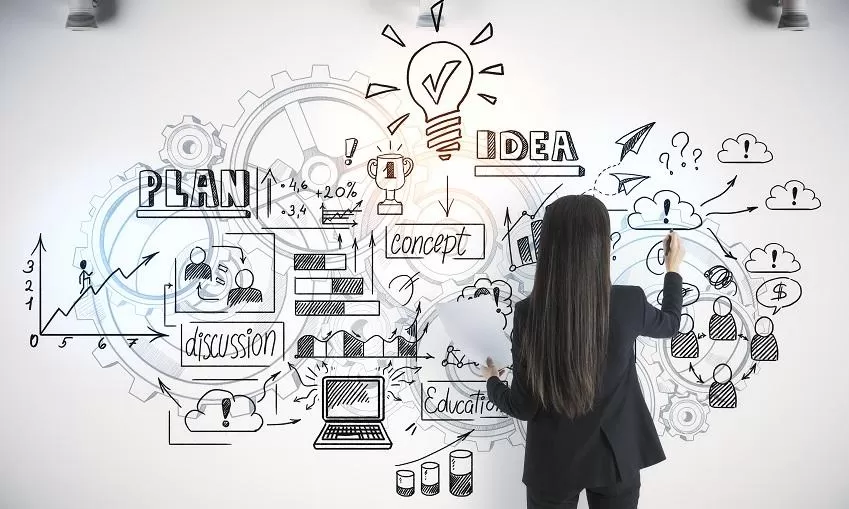 You can't credibly claim thought leadership in a proposal. It’s too late. If the customer doesn't already think of you as a thought leader, what will they think about that unsubstantiated claim? At best it won't affect your evaluation score one bit. At worst it will hurt your credibility. Doesn't being a thought leader require providing leading thoughts? What does claiming leading thoughts and not providing any do for your image? Thought leadership is more about trust than knowledge and not
- 2 comments
- 7,965 views
-
Expectation management: You should make sure that what is expected of you and what you are expecting are both clearly communicated. If you are not sure, then ask for clarification. When receiving an assignment, communicate your acceptance. This should include acknowledging both the deadlines and the scope of the assignment. After you have had a chance to review the Content Plan in detail, you should communicate any issues that may arise. This may include t
- 0 comments
- 217 views
-
If you are like me, you learned the basic five-paragraph essay format (and about a dozen variations) in school. You remember: introductory paragraph, three supporting paragraphs, and concluding paragraph. Most variations follow the same concept: introduce, support, conclude. If you are writing a proposal, this is completely backwards. Consider: The goal of a proposal is to persuade — here is what I want you to conclude, and here’s why. Most proposal evaluators don’t want to be
- 0 comments
- 806 views
-
 The easy answer is all those regulations. Another good one is whether full compliance is mandatory or not. But the real answer is something different. It’s something that people struggle with. You can look up the regulations. You can learn to comply like a robot. But the most important difference will determine whether your proposal is a success or a failure. How do you get your proposal started? In both government and commercial proposals, the proposal should really start before the RFP
- 0 comments
- 7,870 views
-
 If you don’t want your proposal to look and sound like every other proposal the customer will have to read, then you need to get good at reading your proposal like the customer, and being honest about what you see… Read your proposal and look for the differentiators. Ask if other companies will claim the same things, whether or not they are true, whether or not your claim is stronger. If they can say the same things, you’ll all sound the same. Differentiators are the secret to writing a
- 0 comments
- 2,294 views
-
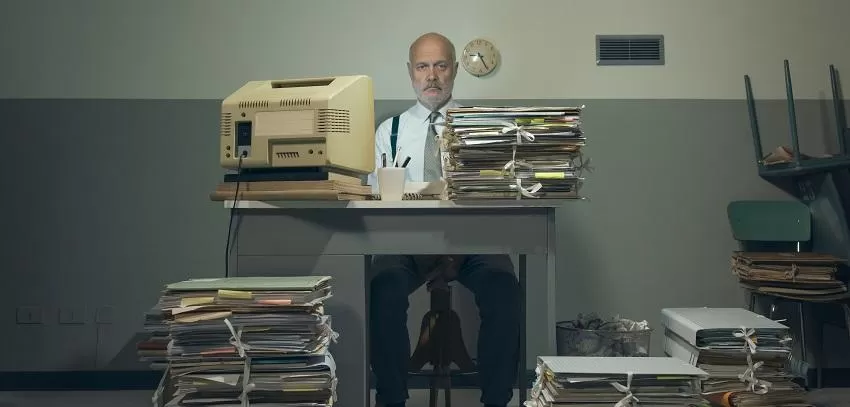 The way we think about proposal efficiency has a major impact on the results we achieve. Instead of managing proposals as a cost to be minimized, we should manage them as an investment. Let's start with how NOT to measure proposal efficiency When we think of proposal efficiency as doing more proposals with less effort, we ignore ROI and focus on lowering costs using an equation like: total cost of proposals divided by the number of submissions total value of wins divided by
- 0 comments
- 3 views
-
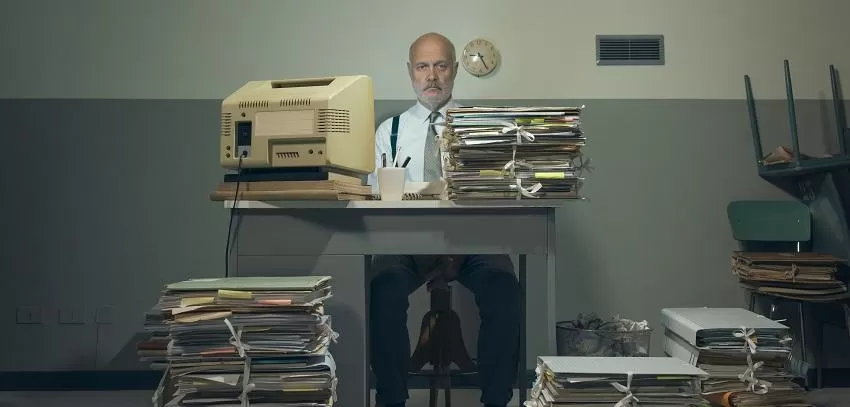 The way we think about proposal efficiency has a major impact on the results we achieve. Instead of managing proposals as a cost to be minimized, we should manage them as an investment. Let’s start with how NOT to measure proposal efficiency When we think of proposal efficiency as doing more proposals with less effort, we ignore ROI and focus on lowering costs using an equation like: total cost of proposals divided by the number of submissions total value of wins divided by
- 0 comments
- 1,421 views
-
 It’s as easy as 1, 2, 3. Most proposal processes are created during proposal development. This is a bit like building the airplane while trying to fly it. But needs must. I’ve often been asked to help a company with a proposal only to find that there basically was no process and I’d have to make one up while doing the proposal. Having written most of what you see on PropLIBRARY makes it easier for me to do this. But it also gives the insight needed to help others in similar circumstances.
- 0 comments
- 1,603 views
-
 I blame Henry Ford for the idea of the proposal assembly line. Although a case could be made that it was Frederick Winslow Taylor and the time and motion study method for management. But hardly anyone recognizes Frederick Winslow Taylor, and sooner or later everyone working in proposals meets someone who suggests setting up an assembly line. Using the assembly line model for proposals is a great way to lose money on proposals. It puts the emphasis on getting proposals out the door instead o
- 0 comments
- 2,870 views
-
The following items can be used as a quality criteria checklist to determine whether what you have written is a proposal or a brochure. A brochure gives people something to buy. A proposal gives them something to consider and helps them reach a decision about it. Good brochure copy makes for bad proposal writing. You can use this list to determine whether what you have written reads like a brochure or reads like a proposal: Does it read like it is primarily an offer to sell the customer so
- 0 comments
- 706 views
-
 The scope of work required to achieve a high proposal win rate is bigger than one person. If your company depends on winning proposals for its revenue, you may need a Proposal Department instead of a proposal person. When to expand is really an ROI decision. When it comes to proposals, you do more to maximize your ROI by winning more than by keeping expenses low. It's time to expand your proposal department when adding another person will enable you to win far more than that person will cos
- 0 comments
- 8,480 views
-
 What is a pink team proposal review? We define a pink team proposal review as an assessment of whether what you plan to write will produce the proposal that your company wants to submit, before you write it. This ensures that people know the points they need to make in order to win, and sets the stage for reviews that lead to improvements instead of re-writes. A simpler version of this would be to determine whether you are ready to start writing the proposal. Unfortunately, at a lot of comp
- 0 comments
- 10,533 views
-
 While proposal management obsesses over process, advanced proposal management focuses on maximizing ROI and realizes that requires more than process alone. We love to obsess over the proposal process. We talk about it as if it is how proposals are done. However, once a proposal manager gains a few years’ experience, every one I’ve ever spoken to realizes that success requires a lot more than just steps. A lot of proposal issues relate to working through other people, especially across orga
- 0 comments
- 1,978 views
-
 People sometimes struggle with addressing benefits when they write proposal copy. They stumble over what words to use and how to say things. One way to overcome this is to do away with most of the words. With a features and benefits table you focus on the key items and not sentence construction. And because they are visual and less wordy, they are friendly to the proposal evaluator as well. A features and benefits table itemizes the key elements of your approach or offering, and turns them
- 0 comments
- 20,691 views
-
 One of the hardest parts of writing a great proposal in response to an RFP is dealing with the fact that many (most?) RFPs are poorly written. You can't follow the instructions, comply with the requirements, offer something great, and maximize your score against the evaluation criteria if you can't understand what the expectations are or if something in the RFP doesn't match up or is broken. Give the customer some sympathy, because writing an RFP is harder than writing a proposal. Try it so
- 0 comments
- 5,919 views
-
 This is an article about doing proposals The Wrong Way. That is what you have to do when you are required to submit a proposal your company is not prepared for and you don’t have the information you need to win it. With all the problems and weaknesses that you have to overcome, maybe your company shouldn’t be bidding it at all, but that decision isn’t up to you. The best practices are all about preparation and won’t help you in adverse circumstances like these. So you’ve got some challenges
- 0 comments
- 14,465 views