


When your proposal is going to be formally evaluated, the customer's evaluators will read your Executive Summary differently. They read it as an introduction to put things in context. Read it to form a first impression regarding how to score your proposal. Read it just to understand how your proposal is organized. If the decision maker has delegated the proposal evaluation, the Executive Summary may be the only part of the proposal that gets read. If the Executive Summary was not asked for, it may not get read at all.
This makes determining how to write a top scoring Executive Summary challenging.
So start by asking what the customer will see if they look at your Executive Summary.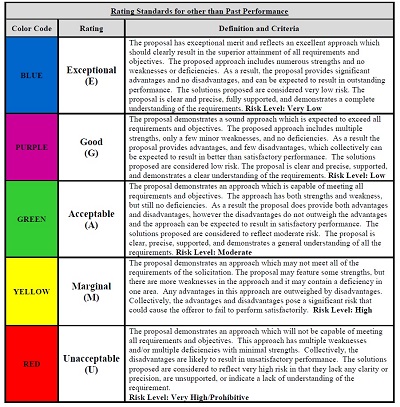
Will they conclude that your proposal is going to be easy to score? Does the Executive Summary itself reflect and support their scoring methodology? Will they see their own evaluation criteria and how you position against them? Will they see a table or headings that match the factors and sub-factors that make up their evaluation criteria?
Will they see a lot of happy-sounding words that have no real relevance to what they need to do to score your proposal? Will they see confidently stated claims without proof that give them nothing to score?
Will they see the same words they are looking for? Will they see the same terminology used in the RFP? Or will they have to translate from your overly clever, more up-to-date terminology to what they asked for and need to assess? Will they be able to find what they are looking for with simple keyword searches?
Will they see that you have relevant differentiators and superior strengths that match up to their scoring forms and give them quotable reasons to score you better than your competitors?
Will they conclude that your proposal is going to be easy to score, since it follows their scoring criteria? Or they might conclude that you didn’t concern yourself with their needs, and all that implies.
Will it pass an AI evaluation? Or will the AI see mismatches between what you have written and what is in the RFP?
Don’t worry, if your Executive Summary doesn't it do what it should and is broken, it can be fixed.
How do you show why you should get the highest score?
Don’t just claim it. Prove it. But also, inform without patronizing.
I would never take the risk of telling the evaluator how to do their job or what score to give. I would never write "Our approach is worthy of the top score" or anything remotely similar. But I definitely like to explain what the strengths of my proposal are using the terminology of the evaluation criteria so that they can see the connection. Exactly how I do this depends on the evaluation criteria, the type of contract, and the complexity of what is being procured. Doing this is the primary goal of the Executive Summary in a proposal.
If the evaluation criteria consist of just a few vaguely defined considerations, you can’t get too specific. You might not need a table to break out individual factors and sub-factors. But if the evaluation criteria list many factors then I consider a table discussing each and every one. The evaluation criteria communicate what is important to the customer, and that is definitely worth talking about.
If the evaluation criteria refer to things that are:
Subjective, I give an explanation of how the differentiators for my offering make it their best alternative. I'll focus on alignment with their goals in order to provide something less subjective they can base their decisions on.
Objective, I focus on providing a clear demonstration that the proposal fulfills them, and then also talk about alignment with their goals to provide motivation. I may provide a checklist, measles chart, or other visual demonstration of meeting the criteria.
“Strengths,” I give a list of the most important ones, again focusing on my differentiators and alignment with the customer's goals.
I treat the Executive Summary like a proof. I seek to prove that when considered through the lens of the customer's evaluation criteria and desired outcomes, our proposal provides them with their best alternative for achieving their goals. Due to the short length, it is acceptable to make claims or draw the conclusions you want the proposal evaluators to reach in the Executive Summary if the proposal itself delivers the proof of your claims. An Executive Summary acting as an introduction should be sufficiently compelling that the customer will be willing to read further in order to consider your proof points. Your claims of greatness aren’t going to make it into the customer’s justification for your score. But if your proof points are compelling, they will.
In addition, I sometimes go so far as to point out important considerations, including things that if they are not addressed indicate weaknesses. These might include potential issues or risks that I know our proposal addresses, but our competitors' proposals might not. This is how I communicate what should get a high score and what should get a low score. I stick to being informative, show insight the customer may not have considered, and position what I say as helping to ensure the customer gets what they want.
Don't stop at the Executive Summary. The idea of speaking directly to each factor and sub-factor, using the terminology of the evaluation criteria, and focusing on proof points instead of claims, should flow down to each individual proposal section. What you write in your Executive Summary can define a structure that flows down into every section of your proposal. This is why it is a good idea to write the Executive Summary before trying to write the rest of your proposal. You can learn a lot about proposal writing by getting good at writing the Executive Summary.
Let's discuss it!
You can post now and register later. If you have an account, sign in now to post with your account.
Note: Your post will require moderator approval before it will be visible.